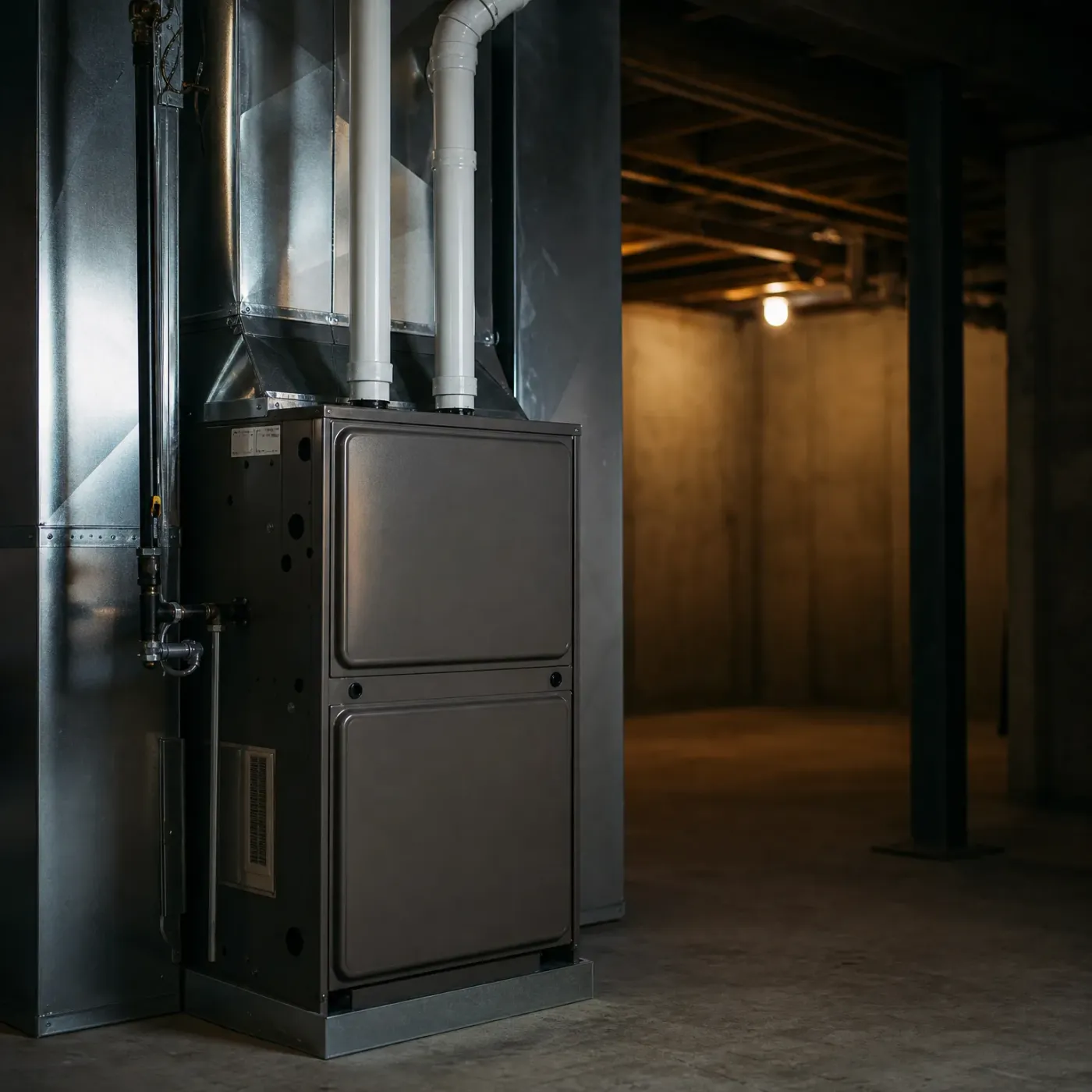




A gray high-efficiency furnace with two white PVC vent pipes stands beside galvanized sheet-metal ductwork in a dim basement with exposed joists and a concrete floor.

It's off your list after this

What temperature to set the heat in an Ohio winter

Most people set 68 and wonder if that's really right for Ohio, or if the furnace is working harder than it should to hold it. This page gets into what a furnace here actually needs to run well through the cold months, and when a setting that seems fine is wearing on the system instead. Skip the back and forth of finding someone to check it. Send the form and that search is off your plate.

I'm done searching

68 degrees works for most homes in Ohio, give or take a couple degrees for comfort. Dropping it to 60 or lower overnight doesn't save much once you account for the furnace working to bring the house back up by morning, and it puts more cycles on a system that's already running hard from November into March. What matters more than the exact number on the thermostat is whether your furnace can actually hold it without short cycling, running long stretches without shutting off, or blowing air that feels cooler than it should. Those are signs of a furnace falling behind, not a thermostat set wrong. A furnace that's been serviced before the cold sets in holds a steady temperature with less strain, which matters here since gas heats most homes but the furnace still runs on electricity to move that air, and power isn't cheap. If yours has gone a year or more without a look, that's worth checking before the next cold snap.

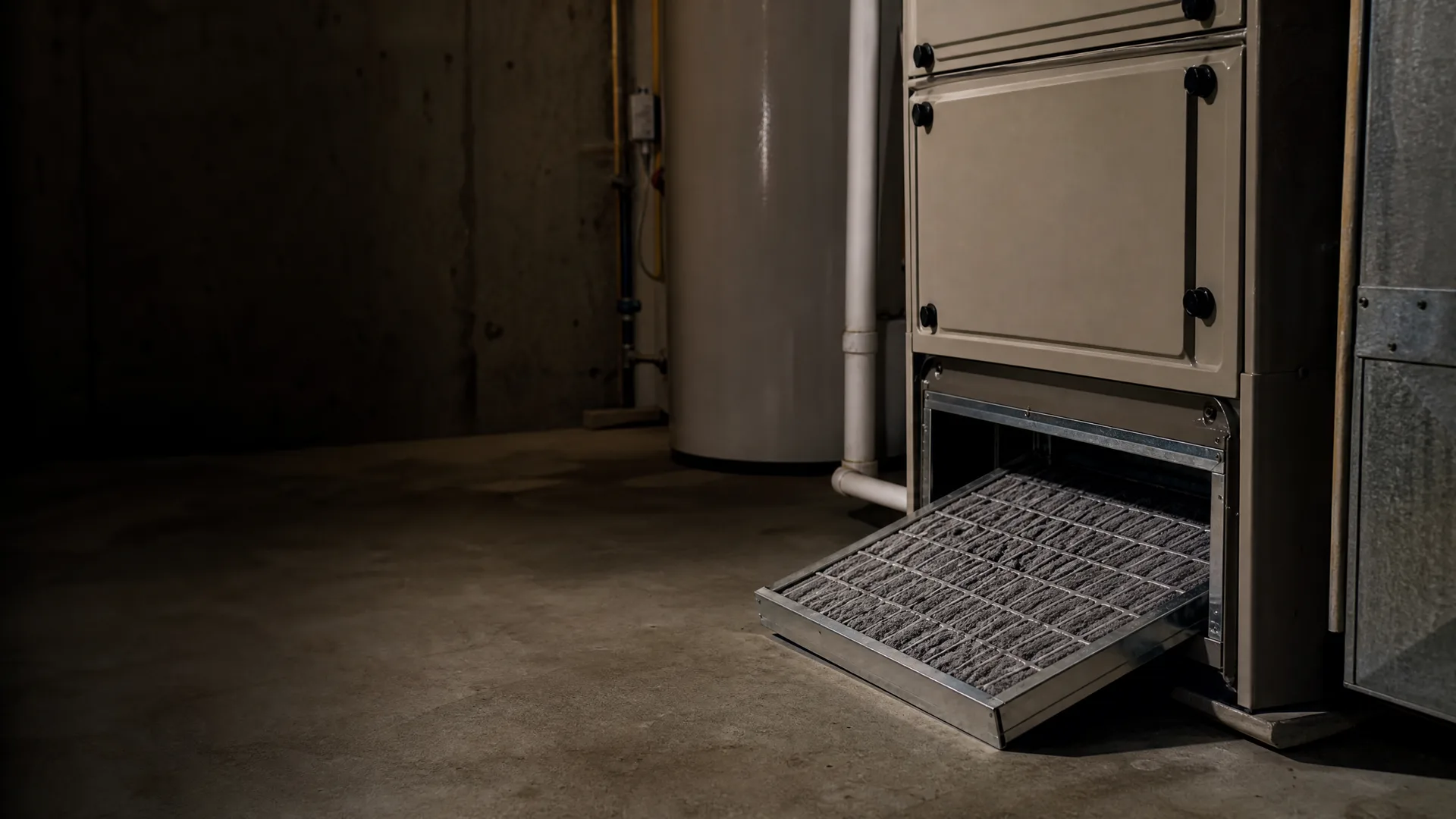
A furnace in a dim basement with a dirty pleated air filter partially pulled out of its slot, beside a water heater and concrete walls and floor.

You pull the filter out and hold it up to the light from the bulb overhead. Grey, matted, the kind that makes you check the date on the last one you bought. Outside it's one of those flat October afternoons, not cold yet but getting there, and the furnace has already kicked on twice since lunch. You slide the filter back in most of the way, then stop and leave it out on the workbench instead, telling yourself you'll swap it before the real cold gets here. Upstairs the thermostat still reads 68. Down here you can hear the blower working for it.

Why does my house feel cold even at 68 degrees?

You've got the thermostat right where it's supposed to be, 68, same as always, but you're still reaching for a sweater in your own living room. It makes you wonder if the number on the wall even means anything, or if something's off with the furnace itself. Before you touch the dial again, it helps to know what actually makes a room feel warm, because it isn't just the air temperature.

The thermostat reads air temperature, not how warm you feel

A thermostat measures the air near it, usually in a hallway, and that air can be 68 while the air by a window or an exterior wall runs several degrees cooler. Your body loses heat to cold surfaces around it, so a room can hold steady at 68 and still feel chilly if you're sitting near a drafty window or an uninsulated wall. This gets worse in January and February here, when outdoor temperatures drop low enough that even double-pane glass pulls heat off your skin. It also points to something worth checking: if the air coming out of your vents feels cooler than it should, or one room never catches up to the rest, that's a furnace or duct issue, not a thermostat problem.

A smiling bearded man in a dark green hooded jacket and blue t-shirt sits on a couch in a living room with shelves, a potted plant, and a bowl of popcorn on a wooden table.
A smiling man in a green long-sleeved shirt sits on a beige sofa in a living room, with a bowl of popcorn in the foreground, a large potted plant and shelving behind him.
A smiling man in a dark blue T-shirt sits on a couch in a dimly lit living room with a bowl of popcorn and a remote on a wooden table, a lit floor lamp and bookshelves behind him, and windows showing greenery.
A smiling bearded man in a dark green long-sleeved shirt sits on a leather couch in a living room, with a bowl of popcorn and a remote control on a wooden table in the foreground.

Stop chasing a furnace pro

A furnace holding 68 degrees through an Ohio winter is doing that job every day from November into March. If it's short cycling, or blowing air that doesn't feel as warm as it should, or running longer than it used to for the same setting, that's wear showing up, not the thermostat number being wrong. Catching it before January, when the furnace can't stop to rest, is what a maintenance visit is for. The alternative is working it out yourself: searching for someone local, calling a few numbers, explaining the same thing about your setting and your system each time, then weighing quotes against each other while the house sits at whatever temperature the furnace can actually manage. Send the request here instead and that part is off your plate. You're not fixing anything tonight by filling it out. You're making sure the furnace gets looked at before the cold really settles in and the setting you picked stops being the thing that decides how warm your house is.

Where the setback actually costs you

A thermostat recovering from 60 back to 68 runs the furnace continuously until it closes that gap, and a furnace that size can take longer to climb eight degrees than most people expect. The burner stays lit the whole time, not cycling on and off the way it does holding a steady temperature. That long recovery run is what eats into the savings a lower overnight setting is supposed to give you. A one or two degree setback overnight costs the furnace far less to recover from and still gives the house a break.


What a steady setting spares the parts

Every time the furnace fires, the igniter heats up, the gas valve opens, and the blower kicks on in sequence. Holding one setting through the day means fewer of those start cycles compared to a thermostat swinging up and down to chase a setback. Fewer starts means less wear on the igniter and the valve over a winter that runs from November into March. A furnace that cycles less often for the same heat output is one with less stress on the parts that fail first and need replacing.

Winter nights average 23°F statewide

23°F is the average overnight low across an Ohio winter. That's the gap your furnace is closing every night to hold 68, not some rare cold snap. It's worth keeping that cycle in good shape going into the months that ask the most of it.

NOAA nClimDiv 1991-2020 county normals weighted by homes

Where This Leaves You

  • 68 degrees holds up as the right winter setting for most Ohio homes, day and night.
  • Closing a 23 degree overnight gap back to 68 is routine work for a furnace kept in good repair.
  • Large setbacks add recovery time and extra cycling without the savings people expect.
  • A furnace that struggles to hold 68 is usually telling you something through longer run times or uneven heat.
  • Maintenance keeps that daily recovery cheap instead of letting a small strain become a bigger repair.
  • The number on the thermostat only means what the furnace behind it can actually deliver.

68 degrees is the answer for most Ohio homes, and that doesn't change much from one house to the next. What changes is whether the furnace behind that number can deliver it without strain. Every night this winter, it's closing a gap of about 23 degrees to get the house back to 68, and that's normal work for a furnace that's in good shape. It's not normal work for one that isn't. Pushing the thermostat down to 60 overnight might feel like it's saving money, but the longer recovery and the extra cycling eat into whatever that saving was supposed to be, and the furnace feels it more than the bill does. If yours is running longer than it used to for the same 68, or the air coming out doesn't feel as warm as it should, that's the furnace telling you the setting isn't the problem. A furnace that gets maintenance going into the cold months handles that nightly recovery without much strain. One that doesn't tends to turn a small issue into a bigger repair right around the point in winter when you need it working the most. The thermostat number is only ever as good as what's behind the wall carrying it out. Set it where it makes sense for your house, keep the furnace capable of hitting it, and the number stops being something to second-guess every night.

A woman in a dark gray sweater reclines on a light sofa with eyes closed and a slight smile, under a textured gray blanket with an open book resting on her lap, with a lit table lamp and plant in the background.
A smiling bearded man in a navy crewneck sweater sits at a dinner table with a glass of red wine, plates and glasses in the foreground, in a dimly lit room with a lamp and framed picture behind him.

Furnace Maintenance

Send one request and you're done looking

Skip calling around to set up a furnace tune-up.

A black-framed smartphone standing upright against a plain white background, its screen filled with solid green.
Step 1 of 3: Equipment