Tell us about the job
Takes about a minute. No obligation.
A furnace install in this area is not a decision a contractor can make from a catalog alone. 105 severe weather events were recorded in Coshocton County, Ohio between 2015 and 2024. At that rate, severe weather is part of what a furnace here runs against every season, and a contractor who ignores it when sizing a new system will leave the homeowner short when the load peaks. Duct layout, equipment capacity, and how the unit is anchored all get decided against what this climate actually asks of the system.
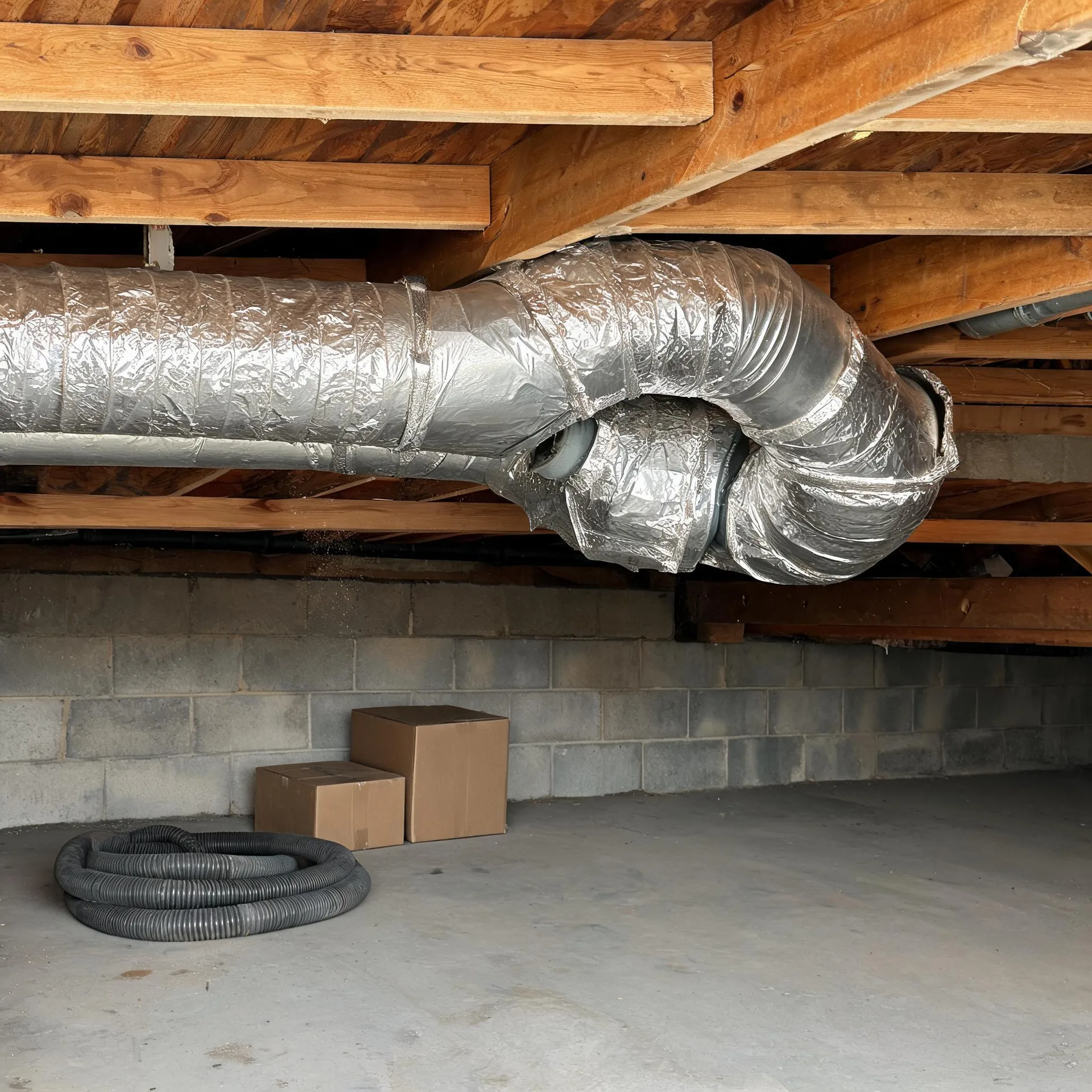
Ductwork sized and routed for equipment that ran decades before current furnace designs existed is what a contractor is working around in much of this county. Half the homes in Coshocton County, Ohio were built in 1967 or earlier (2020-2024 ACS 5-year). Trunks, branches, and returns laid out for an older system often cannot move the air volume a modern furnace needs without modifications that change the scope and cost of the job. The electrical side follows the same logic: service brought in for what a house used then gets checked against what a new unit draws. The ductwork is where the job either stays straightforward or does not.
What Gets Installed With a New Furnace
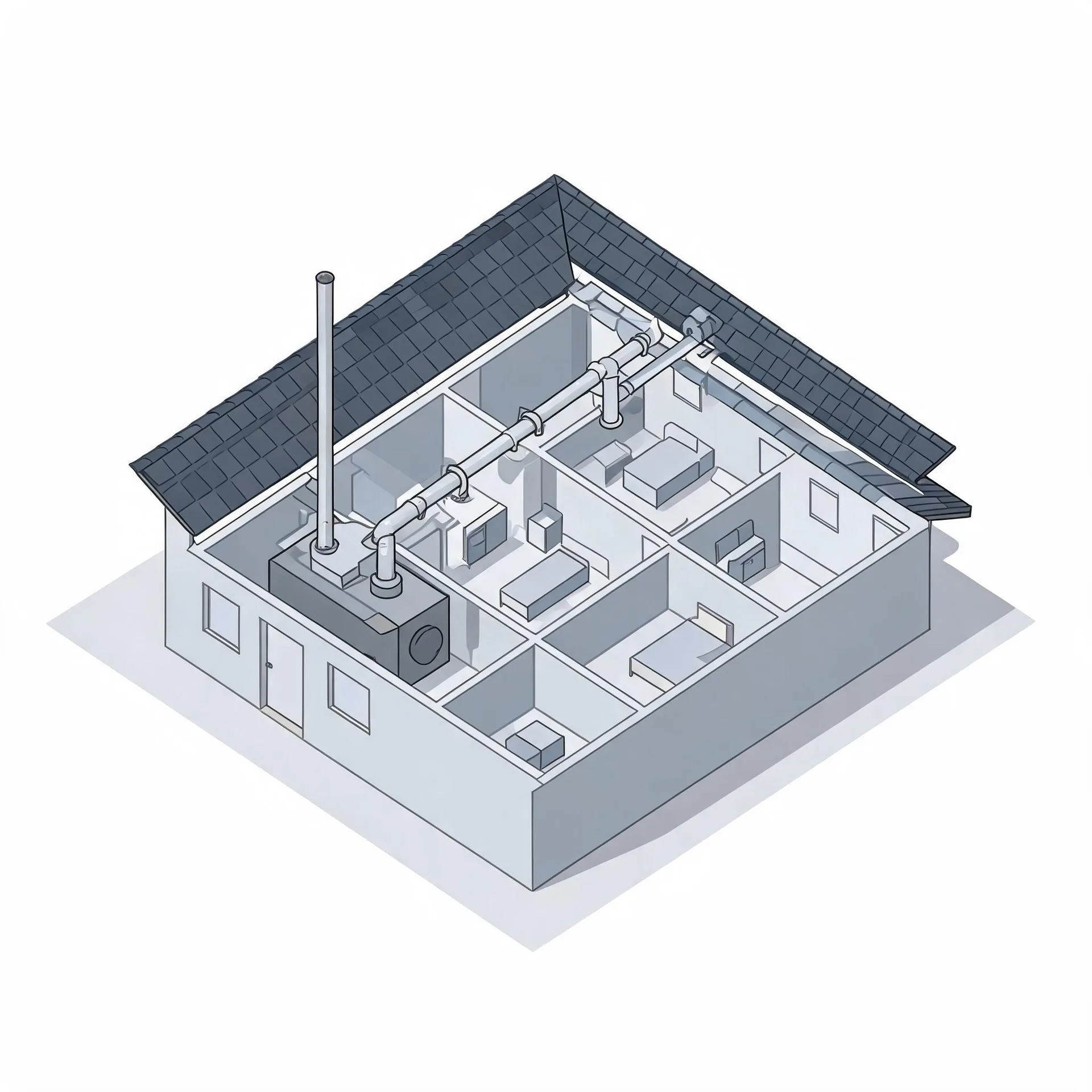
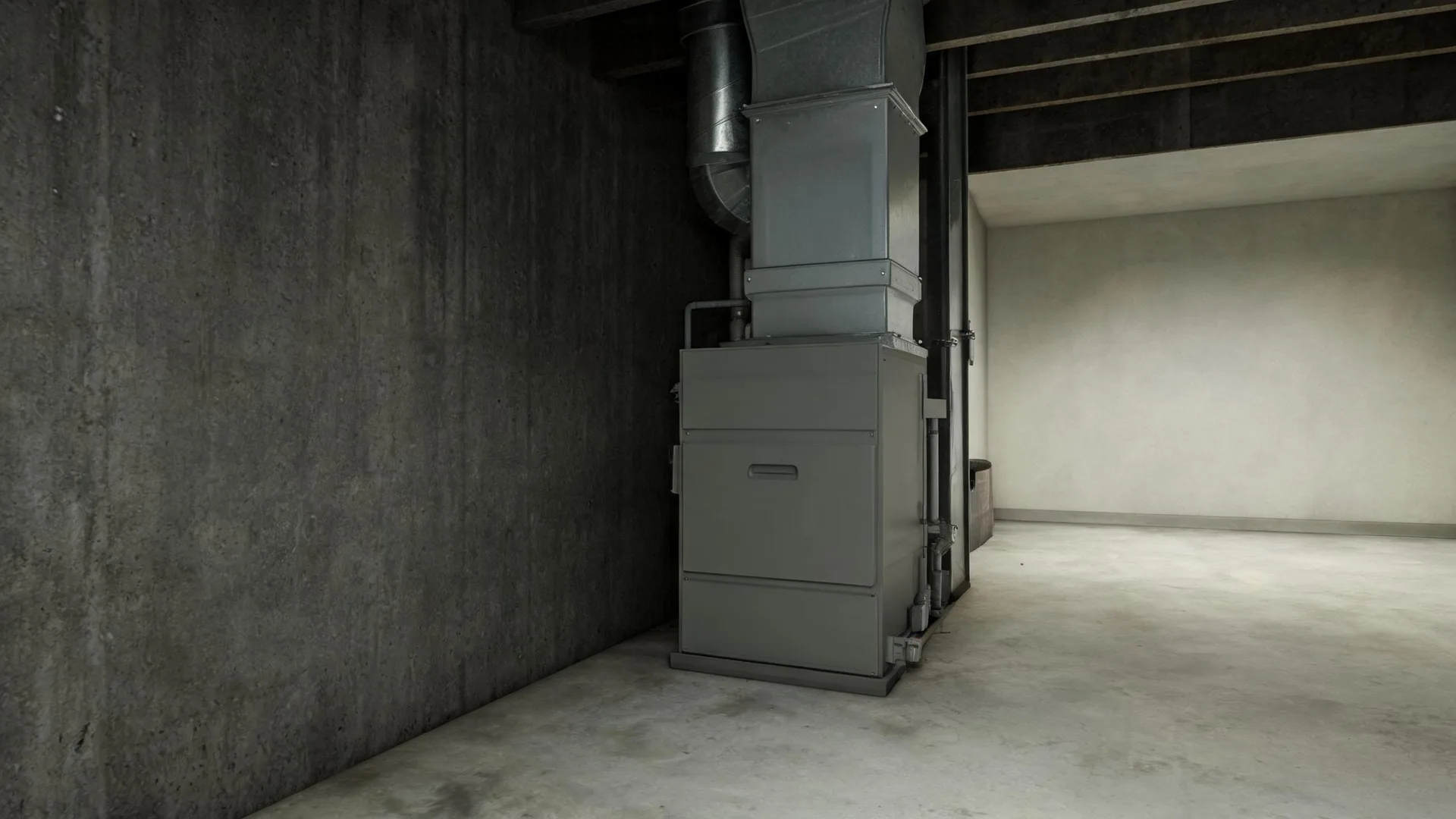
The furnace itself sits in the basement, utility room, or crawl space and is the unit a homeowner buys first. Inside it, a heat exchanger and a blower motor do the core work: one produces the heat, the other pushes conditioned air into the house. A contractor fits the unit to the existing or new plenum before anything else connects.
The flue pipe runs from the furnace to an outside wall or up through the roof, carrying combustion gases out of the living space. Alongside it, the thermostat mounts on an interior wall and gives the homeowner direct control over the system. A contractor also ties in the gas line connection at the furnace itself, which is where the fuel supply enters the unit.
The drawing shows a typical layout, and a licensed contractor determines exactly which components apply to your house and how each one gets positioned.
Get matched in Coshocton CountyCoshocton County, by the numbers
105 severe weather events were recorded in Coshocton County, Ohio between 2015 and 2024.
NOAA National Centers for Environmental Information, Storm Events Database, bulk CSV export, events 2015-01-01 through 2024-12-31.Half the homes in Coshocton County, Ohio were built in 1967 or earlier (2020-2024 ACS 5-year).
U.S. Census Bureau, 2020-2024 American Community Survey 5-Year EstimatesCoshocton County, Ohio holds 16,308 housing units (2020-2024 ACS 5-year).
U.S. Census Bureau, 2020-2024 American Community Survey 5-Year EstimatesOwners occupy 72.9% of the occupied homes in Coshocton County, Ohio (2020-2024 ACS 5-year).
U.S. Census Bureau, 2020-2024 American Community Survey 5-Year EstimatesFurnace Installation Rules & Standards for Coshocton County, Ohio18 sourced codes and standards
What the Installation Actually Looks Like
Non-weatherized gas furnaces manufactured on or after November 19, 2015 must reach 80.0 percent AFUE.
Non-weatherized oil-fired furnaces manufactured on or after November 19, 2015 must reach 83.0 percent AFUE.
Mobile home gas furnaces manufactured on or after November 19, 2015 must reach 80.0 percent AFUE.
Non-weatherized gas furnaces manufactured on or after December 18, 2028 must reach 95.0 percent AFUE, up from the 80.0 percent minimum that applies to units manufactured before that date.
Contractor Rules in Coshocton County, Ohio
An Ohio home construction services contract must include a copy of the supplier's certificate of insurance showing general liability coverage of not less than two hundred fifty thousand dollars.
In Ohio a home construction service means the construction of a residential building, including the repair, improvement, remodel or renovation of an existing structure, and does not include construction on a structure containing four or more dwelling units except for work on an individual dwelling unit within it.
A home construction service supplier in Ohio is defined as a person who contracts with an owner to provide home construction services for compensation and who maintains a general liability insurance policy of not less than two hundred fifty thousand dollars.
The Ohio construction industry licensing board issues state licenses to individuals as heating, ventilating and air conditioning contractors, refrigeration contractors, electrical contractors, plumbing contractors and hydronics contractors.
An Ohio board of county commissioners may accept a valid and unexpired Chapter 4740 license held by a heating, ventilating and air conditioning contractor toward its own licensing requirements for work on one-, two-, or three-family dwelling houses.
An Ohio board of county commissioners may adopt rules licensing heating, ventilating and air conditioning contractors who are not required to hold a state license under Chapter 4740.
In Ohio municipal law a specialty contractor includes heating, ventilating and air conditioning contractors, refrigeration contractors, electrical contractors, plumbing contractors and hydronics contractors.
An Ohio board of county commissioners may not register a specialty contractor who is required to hold a license under Chapter 4740 but does not hold a valid one.
An Ohio municipal corporation may not register a specialty contractor who is required to hold a license under Chapter 4740 but does not hold a valid one.
In Ohio building law a residential building means a one-family, two-family or three-family dwelling house and any accessory structure incidental to it, and does not include an industrialized unit, a manufactured home or a mobile home.
Ohio's contractor licensing chapter reaches only work on a construction project, and a construction project is defined to exclude residential buildings, so an HVAC contractor working on a one-, two-, or three-family dwelling in Ohio falls outside the state licensing requirement.
Violating Ohio's contractor licensing prohibition is a minor misdemeanor on a first violation and a misdemeanor of the fourth degree on subsequent violations.
Under Ohio law no person may act as or claim to be a type of contractor that Chapter 4740 licenses unless that person holds a license issued under that chapter.
In Ohio a home construction service supplier may not perform a home construction service costing twenty-five thousand dollars or more without entering into a written home construction services contract with the owner, unless the supplier and owner enter into a cost-plus contract.
Severe Weather Events in Coshocton County
Heating equipment works hardest when the weather outside stresses a home, and Coshocton County winters put real load on any furnace. How often that stress arrives is a local fact, and it shapes what a furnace installed here has to handle year after year.
105 severe weather events, 2015–2024. Source: NOAA National Centers for Environmental Information, Storm Events Database.